SushiSwap, the Vampire Attack, and Open Source Politics
SushiSwap forked Uniswap's code and tried to steal its liquidity. The 'vampire attack' raises uncomfortable questions about the economics of open source software, the value of community versus code, and what it means to compete in DeFi.
SushiSwap, the Vampire Attack, and Open Source Politics
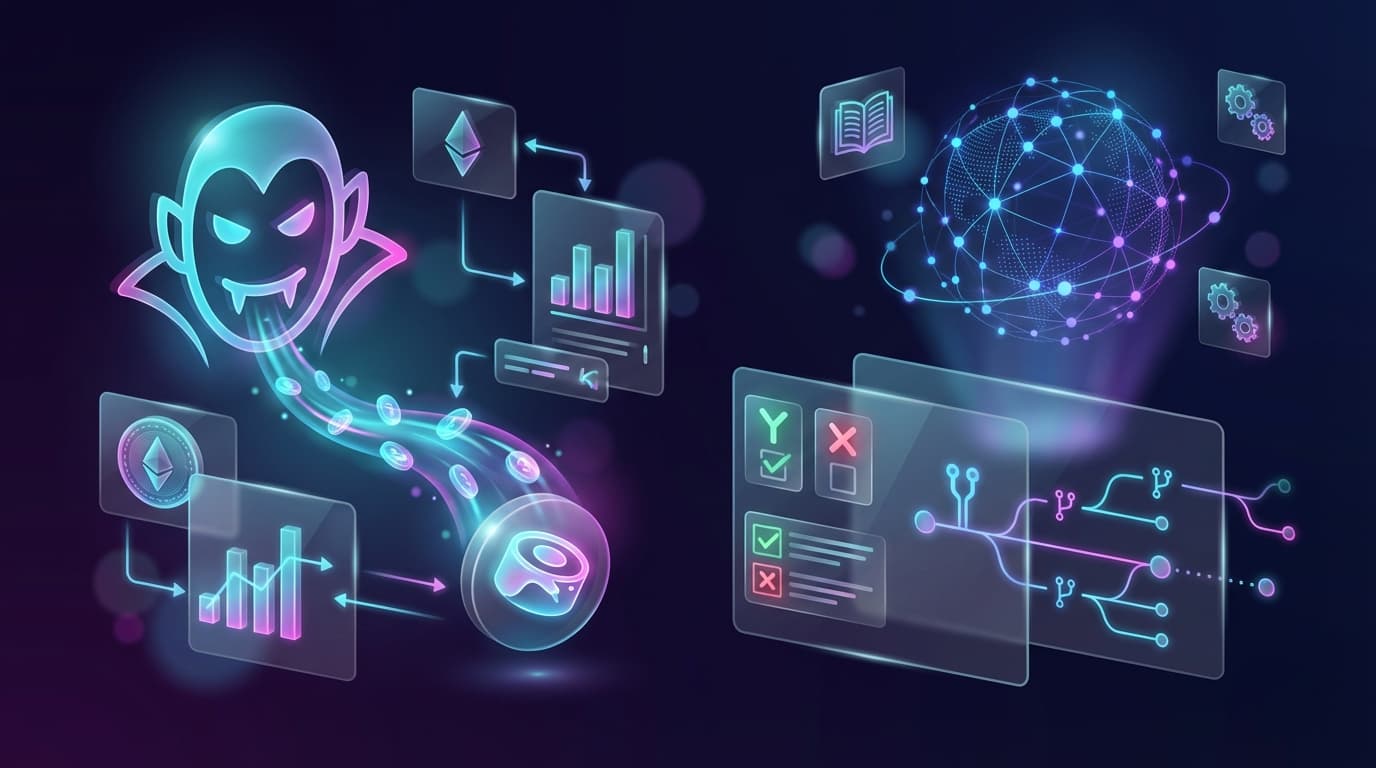
SushiSwap launched as a fork of Uniswap with one addition: a governance token (SUSHI) distributed to liquidity providers. The strategy was explicit — migrate Uniswap's liquidity to SushiSwap by offering token incentives that Uniswap did not provide. The crypto community called it a "vampire attack": draining the lifeblood of one protocol to feed another.
The drama escalated when Chef Nomi — SushiSwap's pseudonymous creator — sold $14 million worth of SUSHI tokens from the development fund, crashing the price and triggering accusations of a rug pull. He later returned the funds and transferred control of the project to Sam Bankman-Fried of FTX, who oversaw the migration of over $800 million in liquidity from Uniswap to SushiSwap.
The episode was messy, dramatic, and deeply instructive about the economics of open source in DeFi.
The Open Source Dilemma
Uniswap's code is open source. Anyone can read it, copy it, and deploy their own version. This openness is a core value of the DeFi ecosystem — it enables transparency, composability, and permissionless innovation. But it also means that any successful protocol can be forked by anyone, at any time, with zero marginal cost.
SushiSwap demonstrated the vulnerability this creates. Uniswap spent years developing its AMM model, building its brand, and attracting liquidity. SushiSwap copied the code in an afternoon and used token incentives to redirect that liquidity. The question this raises is fundamental: if code can be copied for free, what is the defensible value of a DeFi protocol?
The answer, it turns out, is not the code. It is everything around the code — the team, the brand, the community, the integrations, the trust, and the network effects that accumulate over time. Uniswap survived the vampire attack. Its liquidity recovered. And it responded by launching its own governance token (UNI) — retroactively airdropping tokens to every address that had ever used the protocol.
What This Means for DeFi
The SushiSwap episode established several precedents. First, that token incentives are a powerful tool for bootstrapping liquidity — powerful enough to redirect hundreds of millions of dollars in days. Second, that forks are a permanent competitive threat in open source DeFi — any protocol that does not distribute value to its users risks losing them to a fork that does. And third, that the value of a DeFi protocol lies in its community and network effects, not in its code.
This has implications for how DeFi protocols are designed and governed. Protocols must distribute value to their users — through governance tokens, fee sharing, or other mechanisms — or risk being forked by competitors that do. The era of DeFi protocols capturing value without sharing it with users is over.
My View
The vampire attack is an ugly but natural consequence of open source economics. It forces protocols to compete on value distribution, not just on technology. The protocols that share value with their users will retain them. The ones that do not will lose them to forks. This dynamic is healthy for users — it ensures that the value created by DeFi accrues to the people who use it, not just the people who build it.
In DeFi, code is a commodity. Community is the moat. The protocols that understand this will thrive. The ones that treat their users as captive audiences will be forked into irrelevance.