NFTs Are More Than JPEGs — But the Market Doesn't Know It Yet
Non-fungible tokens are gaining traction in digital art and collectibles. The current use cases are niche. But the underlying primitive — verifiable digital ownership — has implications far beyond art. The market is pricing the meme, not the infrastructure.
NFTs Are More Than JPEGs — But the Market Doesn't Know It Yet
Non-fungible tokens are having a moment. Digital artists are selling work for thousands of dollars on platforms like SuperRare and Rarible. NBA Top Shot is experimenting with basketball highlight collectibles. And a growing community of creators and collectors is building around the idea that digital objects can be owned, traded, and valued in the same way as physical ones.
The current market is small — total NFT trading volume is a fraction of DeFi's. And the use cases are narrow — primarily digital art and collectibles, with some experimentation in gaming and virtual worlds. From the outside, it looks like a niche hobby for crypto enthusiasts with disposable income.
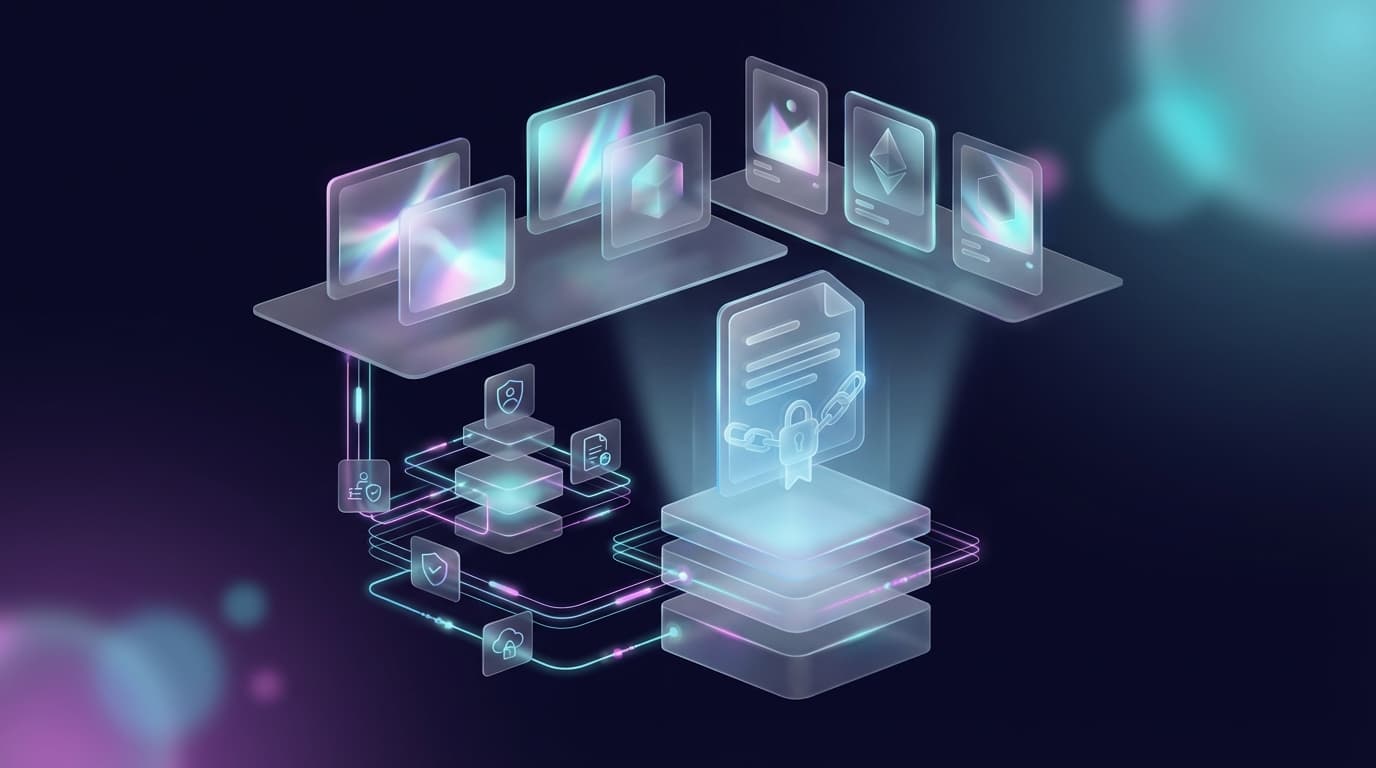
But the underlying primitive — verifiable digital ownership, enforced by a blockchain rather than a platform — has implications that extend far beyond art.
The Ownership Primitive
An NFT is a token on a blockchain that represents ownership of a unique digital object. Unlike fungible tokens (where one Bitcoin is identical to another), each NFT is distinct — it has a unique identifier, unique metadata, and a unique ownership history recorded on-chain.
This seems trivial until you consider what it enables. Today, digital ownership is mediated by platforms. You do not own your Kindle books — Amazon licenses them to you and can revoke that licence at any time. You do not own your in-game items — the game developer controls them and they disappear when the game shuts down. You do not own your social media content — the platform owns the distribution and can demonetise or remove it without recourse.
NFTs create a different model: ownership that is verifiable, transferable, and independent of any platform. A digital object represented as an NFT can be bought, sold, lent, or used across any platform that recognises the standard — without the permission of the original creator or any intermediary.
Where This Goes
The current NFT market is focused on art and collectibles because those are the simplest use cases — objects whose value is primarily aesthetic or sentimental, where the concept of ownership is intuitive. But the ownership primitive applies to any digital object that benefits from verifiable provenance and transferability.
Event tickets that cannot be counterfeited and can be resold on a secondary market without Ticketmaster's permission. Academic credentials that can be verified instantly without contacting the issuing institution. Software licences that can be transferred or resold. Music royalties that are tracked and distributed automatically. Real estate deeds that are recorded on-chain rather than in county offices.
These use cases are years away from mainstream adoption. They require infrastructure — wallets, marketplaces, legal frameworks — that does not yet exist at scale. But the primitive is sound, and the early experiments in art and collectibles are proving that the concept works.
My View
The NFT market in 2020 is where DeFi was in 2018 — early, experimental, and easy to dismiss. The current use cases are niche. The valuations are speculative. And the user experience is terrible. But the underlying innovation — verifiable digital ownership on open infrastructure — is real and important. The teams building NFT infrastructure now are building the foundation for a much larger market in digital ownership that will emerge over the next decade.
NFTs are not about art. They are about ownership — the ability to own, transfer, and prove provenance of digital objects without relying on any platform or intermediary. Art is the first use case. It will not be the last.