Layer 2 Rollups Are Ethereum's Real Scaling Answer
Optimistic rollups and ZK-rollups are going live on Ethereum. They offer 10-100x throughput improvements while inheriting Ethereum's security. After years of scaling debates, the practical answer is here — and it is not a new Layer 1.
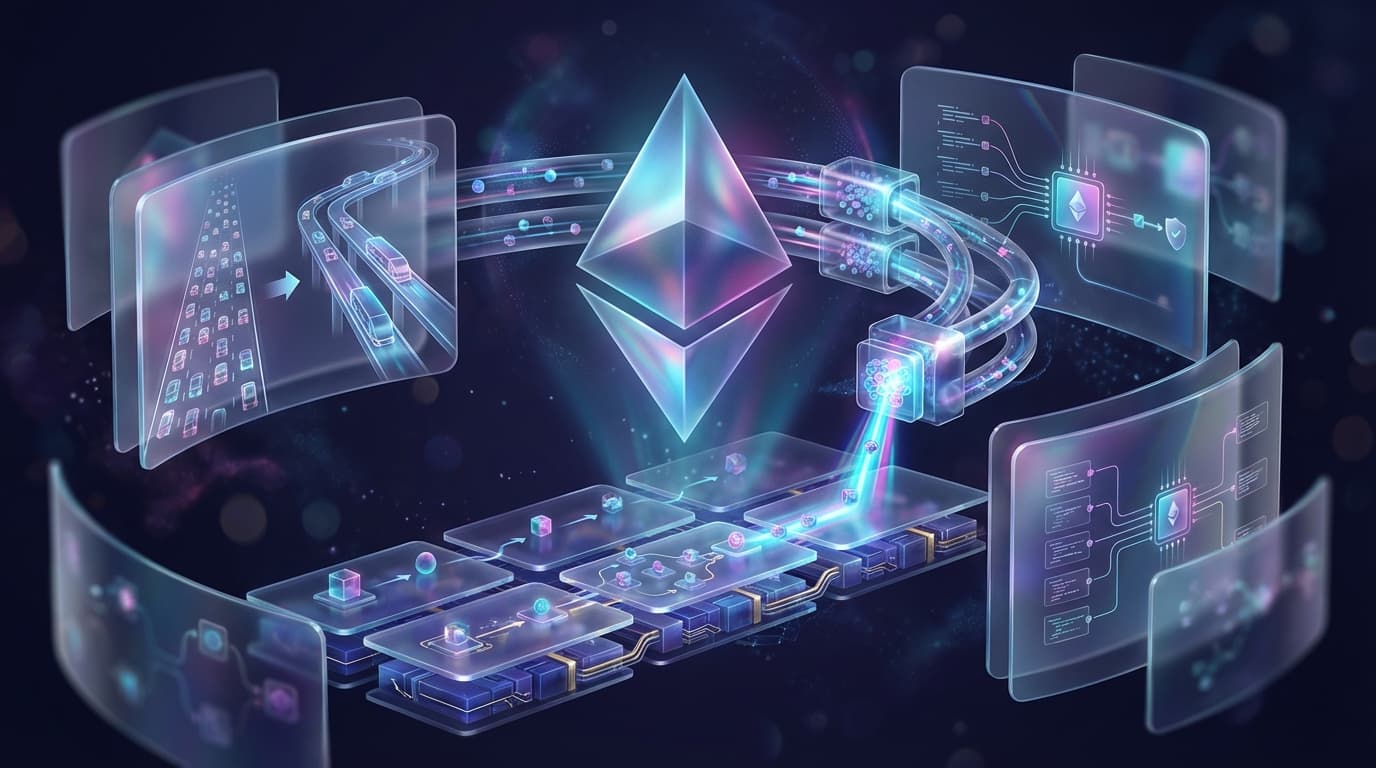
Layer 2 Rollups Are Ethereum's Real Scaling Answer
The Ethereum scaling debate has raged for years. Alternative Layer 1 blockchains — Solana, Avalanche, Binance Smart Chain — have attracted users and capital by offering faster transactions and lower fees. Critics have argued that Ethereum is too slow and too expensive to serve as the foundation for decentralised finance. And the Ethereum community has responded with a roadmap that, until recently, felt perpetually distant.
That is changing. Optimistic rollups — Optimism and Arbitrum — are launching on mainnet. ZK-rollups — zkSync, StarkNet, and others — are in advanced development. And the practical scaling answer for Ethereum is becoming clear: it is not a faster Layer 1. It is a constellation of Layer 2 networks that process transactions off-chain while inheriting Ethereum's security guarantees.
How Rollups Work
Rollups execute transactions off the main Ethereum chain but post transaction data back to Ethereum, inheriting its security. The key insight is that Ethereum does not need to execute every transaction — it just needs to verify that the transactions were executed correctly and store the data needed to reconstruct the state if something goes wrong.
Optimistic rollups assume transactions are valid by default and only execute them on Ethereum if someone submits a fraud proof challenging the result. This approach is simpler to implement and compatible with existing Ethereum smart contracts, but it requires a challenge period — typically seven days — before withdrawals to Layer 1 are finalised.
ZK-rollups use zero-knowledge proofs to cryptographically prove that every batch of transactions was executed correctly. There is no challenge period because the proof itself guarantees correctness. The tradeoff is that generating ZK proofs is computationally intensive and the technology is less mature than optimistic rollups.
Both approaches offer dramatic improvements: 10-100x more throughput, proportionally lower fees, and near-instant transaction confirmation on the rollup itself.
Why This Matters
Rollups resolve the tension that has defined Ethereum's competitive position for the past two years. Ethereum has the deepest liquidity, the largest developer ecosystem, and the most composable DeFi stack — but it is too expensive for most users. Alternative L1s offer lower fees but lack Ethereum's network effects and security guarantees.
Rollups give Ethereum both: the security and network effects of the base layer, with the throughput and low fees of a high-performance execution environment. A user interacting with DeFi on Arbitrum gets Uniswap, Aave, and Compound at a fraction of the cost — while their assets remain secured by Ethereum's validator set.
My View
The rollup-centric roadmap is the most important strategic decision the Ethereum community has made. It acknowledges that the base layer does not need to do everything — it needs to do one thing well (security and data availability) and let specialised execution layers handle the rest. This modular architecture is more scalable, more flexible, and more resilient than any monolithic approach.
The alternative L1s that gained traction during Ethereum's fee crisis will face increasing competitive pressure as rollups mature. Users who migrated to Binance Smart Chain or Avalanche for lower fees will have less reason to stay when Ethereum offers comparable fees with superior security. The L1 wars are not over, but the rollup-centric roadmap significantly strengthens Ethereum's position.
Ethereum's scaling answer is not a faster chain. It is a smarter architecture — one that separates execution from security and lets each layer do what it does best. Rollups are that architecture made real.